Taijul Islam Reveals On-Field Exchange with Shan Masood in Sylhet Test
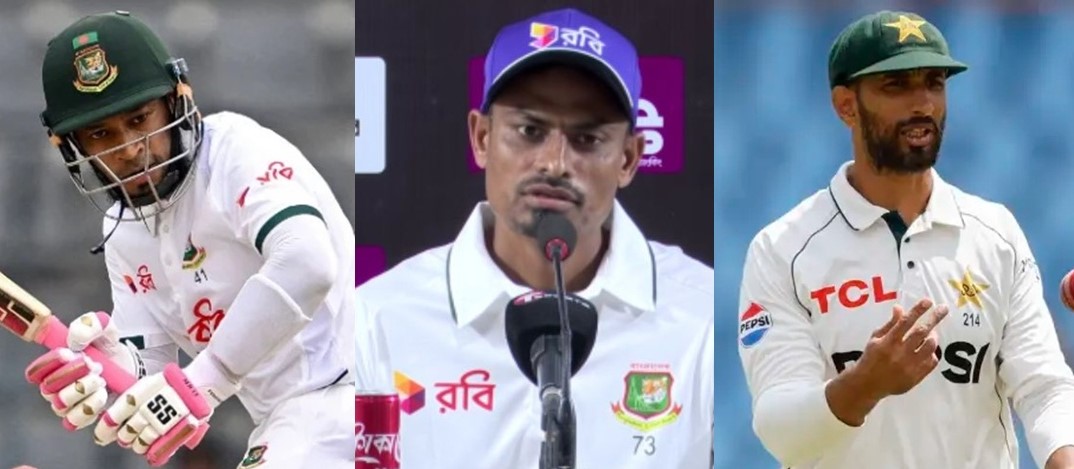
Bangladesh Build Massive Lead After Mushfiqur Centurysensational Knock
On the back of Mushfiqur Rahim’s brilliant century, Bangladesh have taken a commanding position in the Sylhet Test, setting Pakistan a daunting target of 437 runs to win. After posting 390 in their second innings, Bangladesh have put themselves in a prime position to secure a historic victory on home soil.
Critical Partnerships Shift Momentum
Day 3 belonged to the hosts as Mushfiqur Rahim anchored the innings with composure and aggression when needed. He forged crucial partnerships with Litton Das and, notably, with all-rounder Taijul Islam. Their 77-run stand for the seventh wicket not only absorbed pressure but steadily extended Bangladesh’s advantage.
While Mushfiqur’s knock grabbed headlines, Taijul’s composed 22 runs proved vital. More than the runs, his presence at the crease allowed the experienced batter to settle and shift gears. This partnership underscored the growing reliability of Bangladesh’s lower order — a department often questioned in past series.
Taijul Breaks Silence on On-Field Tension with Shan Masood
In a revealing post-play interview, Taijul Islam opened up about a brief, heated exchange involving Pakistan captain Shan Masood during the critical phase of Bangladesh’s innings.
“When you are in a match, many things can happen,” Taijul said. “They had been fielding for a long time, so maybe they lost a bit of temper. Mushfiqur bhai didn’t say anything. He was just talking normally with the umpire. I’m not sure what they understood, but they reacted in their own way.”
The moment, though subtle, highlighted the mounting pressure on Pakistan as the hosts tightened their grip. Umpire intervention kept things from escalating, but the intensity of the exchange reflected the high stakes of the contest.
Responding to Sledging With Bat in Hand
Taijul also addressed being targeted by Saud Shakeel, who reportedly urged him to come out and bat. Taijul’s response was measured: “What happened with me was – he told me to come and bat. But that’s not his job, it’s my job.”
When asked if his subsequent boundary was a direct reply to the taunt, the left-hander smiled and said, “When you go out to bat, these things happen… and the ball was there to be hit.”
The boundary didn’t just ease pressure — it was a statement. Taijul’s ability to stay focused under verbal fire demonstrated the growing mental toughness within the Bangladesh squad.
Lower-Order Gains Build Team Confidence
Taijul emphasized the team’s collective improvement in supporting the top order. “Earlier, there were some gaps in our lower-order contributions, so questions were raised,” he admitted. “Now everyone is more serious. The coaching staff and players are very committed.”
He added, “If we can contribute even a little, it helps the team. It also helps us individually. If I can score 20-30 runs along with my bowling, that becomes a big advantage.”
With both Litton Das and Mushfiqur Rahim converting their starts into centuries and support from players like Taijul, Bangladesh appear more balanced than ever in Test cricket.
What Lies Ahead for Pakistan?
Chasing 437 on a wearing pitch is a near-impossible task. No team in Test history has successfully chased a total above 418 in the fourth innings, making Pakistan’s target not just difficult — but record-breaking if achieved.
Bangladesh’s bowlers, led by their spinners, will look to exploit fatigue, pressure, and pitch conditions as they aim to wrap up the match on Day 4 or 5. With momentum firmly in their favor, the hosts are knocking on the door of a memorable victory.