Prashant Veer’s Cost Per Run And Wicket For CSK In IPL 2026
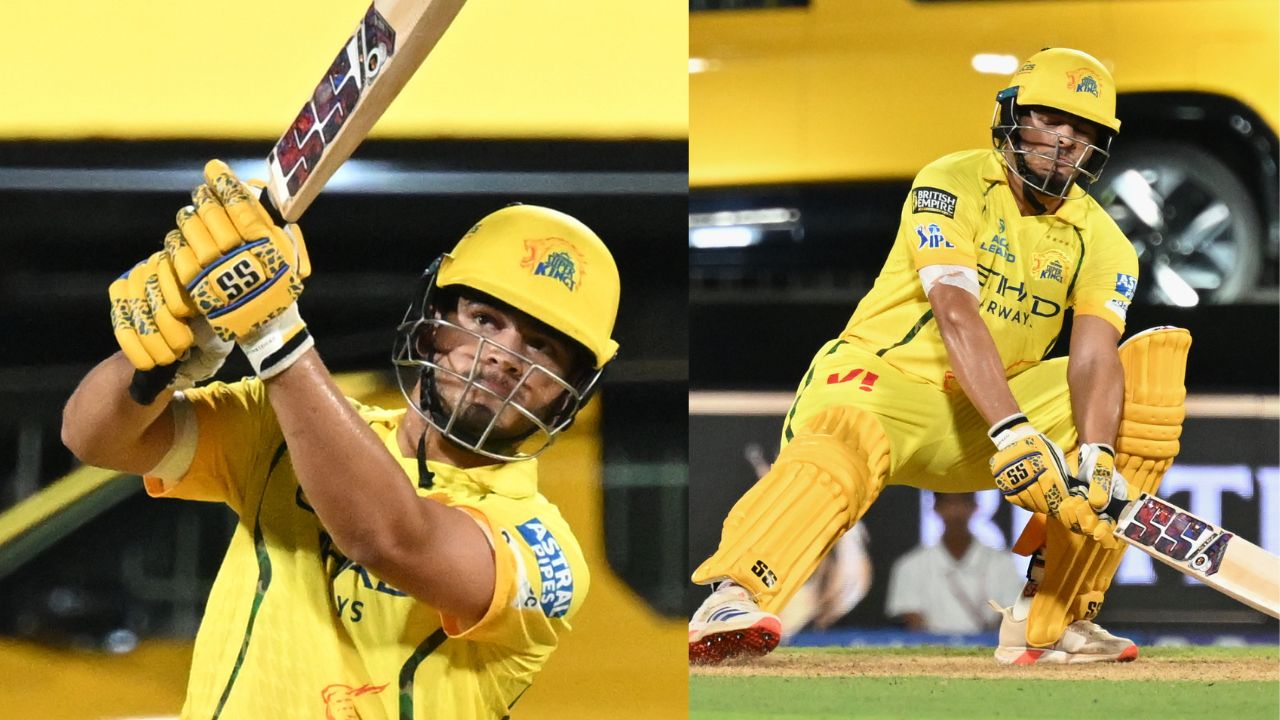
A Challenging Campaign for the Yellow Army
The Chennai Super Kings (CSK) endured a difficult IPL 2026 season, marking the third consecutive year they failed to qualify for the playoffs. Their campaign, which concluded on May 21 following an 89-run defeat against the Gujarat Titans, saw the team secure only six wins in 14 matches. Among the various factors contributing to this decline, the performance of young all-rounder Prashant Veer became a significant focal point for fans and analysts alike.
(Source: AP)
The Heavy Investment
Prashant Veer entered the tournament with immense expectations following a blockbuster performance at the IPL 2026 mini-auction. After a base price of just ₹30 lakh, the Uttar Pradesh all-rounder sparked a fierce bidding war between the Rajasthan Royals and Sunrisers Hyderabad, eventually landing with the Chennai Super Kings for a staggering ₹14.20 crore. This acquisition made him the joint-most expensive uncapped Indian player in the history of the league, with the franchise citing his impressive domestic form in the VHT Elite 2025-26 and SMAT Elite T20 as proof of his long-term potential.
Statistical Breakdown of the Debut Season
Prashant Veer’s journey in IPL 2026 was largely defined by a lack of consistent opportunities. Over the course of six matches, the left-handed talent managed 90 runs at an average of 45 and a strike-rate of 134.32. While these numbers suggest a solid batting foundation, the context of his usage tells a different story. He was never established as a first-choice player, and his debut against the Punjab Kings resulted in a modest, unbeaten six runs.
Analyzing the Financial Impact
When evaluating the efficiency of this signing, the financial metrics reveal the gap between investment and on-field output. By calculating the Prashant Veer’s Cost Per Run And Wicket For CSK In IPL 2026, we see a clear reflection of the team’s struggles to integrate him effectively. With 90 runs scored, his cost per run stands at approximately ₹16.27 lakh. The situation regarding his bowling is even more stark; despite his reputation as a spin-bowling all-rounder, the management utilized him for only two overs across the entire tournament. He conceded 25 runs without claiming a single wicket, rendering his cost per wicket effectively infinite.
The Role of Management and Future Outlook
One must consider whether the lack of returns is a failure of the player or the system. The CSK management failed to provide the role clarity necessary for a young talent to flourish. He was used sparingly, and his primary skill—spin bowling—was largely ignored, which prevented him from making a two-dimensional impact.
Looking ahead to IPL 2027, the question remains: should CSK release him? A decision to release him after a single, albeit expensive, season would be premature. The investment was made with a long-term vision, and truncating that vision after one year of mismanagement would likely be a mistake. By providing the necessary game time and a defined role in the middle order, the franchise could still unlock the talent that prompted such a high auction price in the first place.
Conclusion
The numbers behind Prashant Veer’s maiden IPL season serve as a reminder of the volatility of the auction market. While his cost per run and wicket highlights a lack of immediate return, it is also a testament to the fact that talent development in the IPL requires patience. For CSK to rebound in 2027, they must learn to trust the assets they have purchased, providing them with the platform to succeed rather than relegating them to the sidelines after a few difficult outings.