Kohli has ‘let himself go and he’s having fun,’ says Moody
The Evolution of a Legend
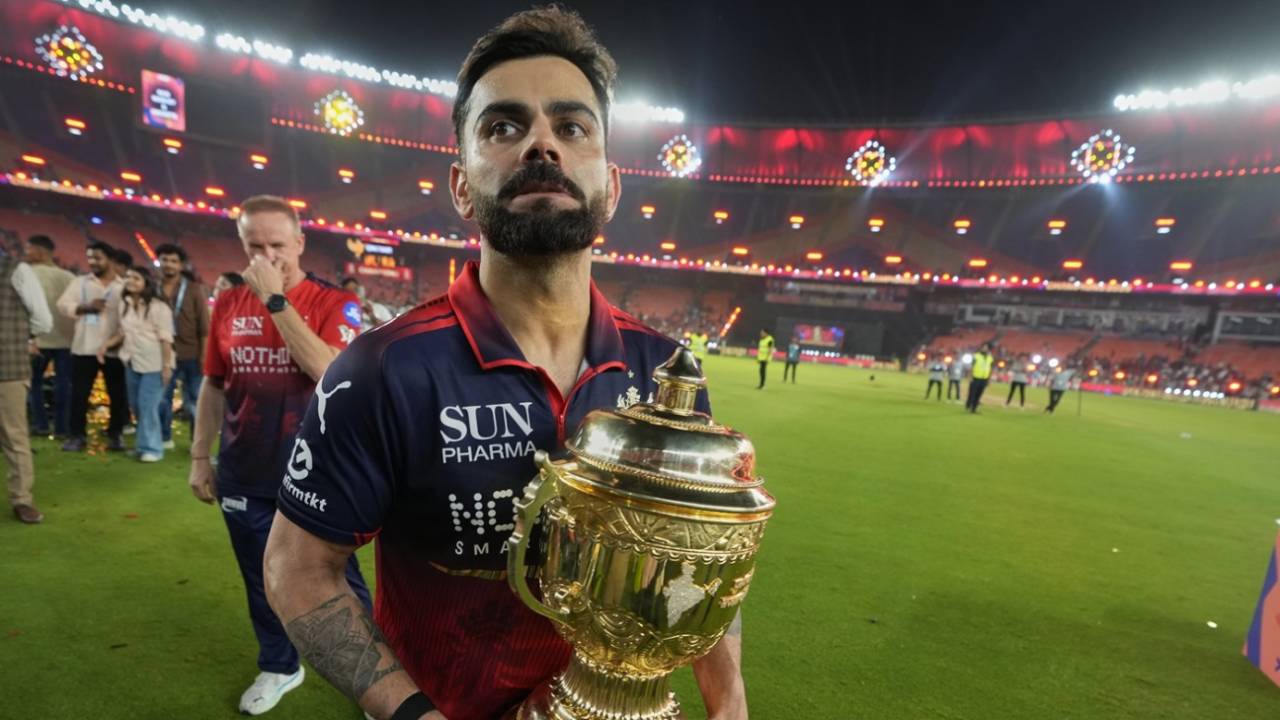
In the high-pressure environment of the Indian Premier League, few players carry the weight of expectations like Virat Kohli. However, the 2026 season showcased a version of the batting maestro that felt revitalized, aggressive, and undeniably liberated. With a staggering strike rate of 165.85, Kohli proved that his ability to adapt is as legendary as his cover drive. While pundits and fans have long analyzed his technical adjustments, the prevailing sentiment in the cricketing fraternity is that Kohli has ‘let himself go and he’s having fun,’ says Moody, summarizing the shift that has defined his recent outings for Royal Challengers Bengaluru.
A Shift in Perspective
Tom Moody, the global director of cricket for the Lucknow Super Giants, was quick to point out the visible change in Kohli’s demeanor during the tournament. Speaking after Kohli’s match-winning 75 not out off 42 balls—a performance that helped secure back-to-back titles for RCB—Moody noted that Kohli was previously treating his batting like a rigid business venture. He was managing his innings with a sense of duty, but this season, that tension has evaporated.
“In previous years, he was batting as a business. And he was managing that business,” Moody explained. “Now, this season, I just see someone just letting everything go and having fun. Because of his brilliance and class, that is increasing everything: the boundaries, his strike rate—it’s all there because he’s got the complete game.”
The Power of a Reliable Support System
While the psychological aspect is vital, the tactical reality of the RCB lineup cannot be ignored. Former cricketer Varun Aaron suggests that Kohli’s newfound freedom is also a product of the team’s structural evolution. For years, RCB relied heavily on the top-order trio of Kohli, Chris Gayle, and AB de Villiers. Today, the composition is markedly different, providing the safety net that every aggressive batter craves.
With the inclusion of players like Rajat Patidar, Devdutt Padikkal, Tim David, and Krunal Pandya, the burden on Kohli’s shoulders has been significantly reduced. Aaron noted, “There’s a reason he’s having more fun because he has a middle order that he can rely on. Now he knows that even if he gets out, there are others who can take the game forward. Most big players, if they have batsmen behind them, they just know they can unleash their best on the bowling attack.”
Redefining T20 Instincts
The statistical evidence of this evolution is striking. Kohli has attempted to hit a boundary on approximately 46% of the balls he has faced this season, a testament to his attacking intent. Ambati Rayudu, observing the technical shifts, highlighted that Kohli has developed a completely new instinct for T20 cricket. Unlike his earlier years, where he often aimed to anchor and build toward a late-inning flourish, the current iteration of Kohli focuses on maximizing the immediate delivery.
“He has formed a completely new instinct in terms of his T20 batting,” Rayudu remarked. “He doesn’t want to really plan too far ahead. He’s looking at the next delivery and how he can maximize it.”
A Legacy of Constant Improvement
Kohli himself has spoken about the changing demands of the modern game, acknowledging that the 20-30 extra runs are now the difference between a competitive total and a winning one. By combining his traditional defensive technique with a high-efficiency strike rate, he has managed to silence critics who previously questioned his tempo against spin or his ability to break away from a reserved style of play.
The joy is evident. As Moody concluded, Kohli is no longer burdened by the pressures that once made his batting feel like a task of endurance. He is playing with the ease of someone who has mastered his craft, finding genuine enjoyment in the process. For fans of RCB and the sport at large, this era of Kohli—where the joy is as palpable as the statistics—is perhaps the most exciting chapter of his storied career yet.