Holder, Joseph set up victory as West Indies go 1-0 up in T20I Series
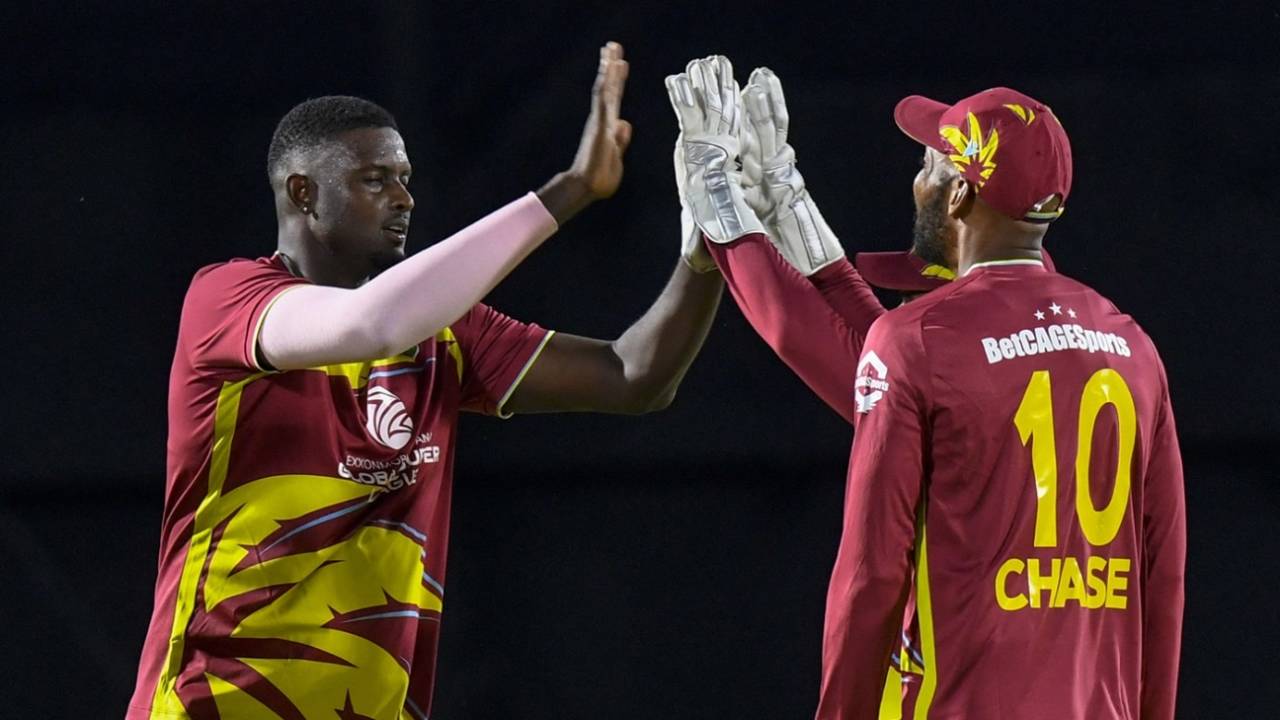
West Indies successfully navigated a spirited Sri Lankan bowling effort to achieve a final-over, but ultimately comfortable, seven-wicket victory in the first T20I at Sabina Park. The rain, which had been forecast, stayed away, allowing a boisterous home crowd to celebrate a win after the preceding ODI washouts. This triumph means West Indies take a crucial 1-0 lead in the series.
The winning runs came courtesy of a flicked six over deep midwicket by Rovman Powell off the expensive Dilshan Madushanka. However, the foundation of the chase was laid by the composure and patience of West Indies captain Shai Hope. Hope played a pivotal role, ensuring he carried his bat through the innings with an unbeaten 65 runs off 54 deliveries, mitigating any potential late-game hiccups.
Hope initially formed a rampant 38-ball opening stand of 67 with Brandon King, providing a blistering start. He then strategically shifted gears through the middle overs, forging crucial partnerships of 28 with Shimron Hetmyer, 33 with Roston Chase, and an unbeaten 21 with Rovman Powell, steering the innings towards the target effectively.
Sri Lanka’s bowlers toiled diligently, managing to drag the game deep into the second half of the chase despite a commanding 66-run powerplay from the West Indies. Their efforts ensured the match extended into the final over. Wanindu Hasaranga was the standout bowler for the visitors, claiming 2 wickets for 32 runs, while Eshan Malinga also impressed with figures of 1 for 26 from his spell.
Despite the bowlers’ tenacity, it was Sri Lanka’s batting performance that ultimately let them down on a wicket that proved challenging for fluent shot-making. Kamindu Mendis waged a lone battle, scoring a resilient 51 runs off 39 balls. Earlier, Kusal Mendis had provided a quickfire start with 36 runs off 23 deliveries. However, contributions from other batsmen were significantly lacking, proving insufficient to set a competitive total.
Jason Holder’s exceptional bowling spell of 3 wickets for just 18 runs was the catalyst for West Indies’ success with the ball. His impactful performance rightly earned him the Player-of-the-Match award, highlighting his crucial role in restricting Sri Lanka’s innings.
King, Hope Break the Chase with a Rapid Start
In the pursuit of a middling target on a sticky surface, a fast start in the powerplay, when the ball is hard and only seven fielders are permitted outside the inner ring, is often a prerequisite for success. The West Indies openers, Shai Hope and Brandon King, delivered precisely that, launching an aggressive assault on the Sri Lankan bowlers.
The dynamic pair blazed 66 runs in the opening six-over salvo, leaving Sri Lanka to lament a series of missed opportunities, many of which involved King. The first chance came off Dushmantha Chameera, who hurried the right-hand batter with a short delivery that King miscued to midwicket. A subsequent no-ball check by the third umpire, however, offered a reprieve, much to the delight of the home crowd. The ensuing free hit saw a yorker squeezed to mid-on for a single that was never truly on, but Sri Lanka again let an opportunity slip by missing a direct hit at the stumps.
Moments later, on the first ball of the very next over, Madushanka appeared to have trapped King leg before wicket. Yet again, the decision was overturned upon review, as the ball was found to have pitched outside leg stump. King capitalized on his good fortune, finding his timing soon after and racing to a 22-ball 37 before eventually being bowled by a googly from Hasaranga. Hope, at the other end, maintained a similar scoring rate during the opening stand, striking 29 off 17 deliveries. However, as the game progressed, he prudently slowed his scoring to crucially bat through to the latter stages and guide the hosts to victory.
Sri Lanka’s Spinners Strangle Through the Middle Overs
While West Indies’ start to the chase was belligerent, the subsequent period starkly contrasted with that early aggression. The ten overs leading up to the death phase yielded only 54 runs for the loss of two wickets, allowing Sri Lanka to claw their way back into the contest. Despite West Indies’ early impact, which always kept them as favorites, Sri Lanka’s middle-overs squeeze proved crucial in keeping them in the game until the final stages.
Key to this defensive effort was the spin partnership of Maheesh Theekshana and Wanindu Hasaranga. Hasaranga, though more expensive, conceding 32 runs in his four overs, was effective in breaking partnerships, picking up the crucial wickets of King and Hetmyer. Theekshana, on the other hand, bowled an exceptionally tight spell, remaining wicketless but conceding a mere 20 runs from his four overs, effectively stifling the scoring rate.
They were ably assisted by Eshan Malinga, who carried over his impressive Indian Premier League form. Malinga displayed excellent variation in his lengths and pace, delivering a commendable four-over spell for just 1 wicket and 26 runs. Dushmantha Chameera also responded well after an expensive start, landing some crucial yorkers in the death overs to maintain pressure. The effectiveness of Sri Lanka’s bowling was evident in the fact that between the tenth and the final over, West Indies managed to hit just one six and two fours, setting up a tense finish where they required six runs off the final over. Rovman Powell, however, needed only two deliveries to seal the win.
Early Wickets Dampen Kusal Mendis’ Fireworks
Earlier in the innings, Kusal Mendis continued his rich vein of form, providing Sri Lanka with an explosive start. His 23-ball 36 ensured a near ten-runs-per-over powerplay for the visitors, with 26 of those runs coming from boundaries, including three towering sixes. Two of these sixes were struck consecutively off Matthew Forde in a 17-run fourth over, which proved to be Sri Lanka’s most profitable over of the evening. However, a flurry of wickets towards the end of the powerplay quickly reined in the visitors, just as they seemed poised to build significant momentum.
From a commanding position of 43 for no loss, Sri Lanka suddenly found themselves struggling at 56 for 3 by the end of the powerplay, and then further deteriorated to 65 for 4 midway through the eighth over. Two of these four crucial wickets were claimed by Shamar Joseph, although he owed one dismissal to a moment of brilliance from Shimron Hetmyer. Hetmyer took a stunning catch at deep square leg to remove Pavan Rathnayake, handing Joseph his first wicket. Joseph’s second scalp came when he delivered a rapid delivery at 142 km/h on an in-between length, inducing a leading edge from Kusal Mendis that popped up to point. Sri Lanka’s situation was made considerably more perilous by their 6-5 combination, which meant a relatively shorter batting lineup.
Kamindu Mendis and Dasun Shanaka Consolidate Under Pressure
Following the sudden loss of their top order, including their in-form captain, Kamindu Mendis and former captain Dasun Shanaka faced a formidable challenge. With only Wanindu Hasaranga offering any significant batting depth to follow, preserving wickets became paramount and taking unnecessary risks was minimized. This cautious approach was reflected in the partnership’s scoring rate, with only eight boundaries, including three sixes, being struck between the pair in the eight overs they batted together. That they still managed to maintain a run rate of 7.37 during this period was a testament to their diligent running between the wickets.
Despite their efforts, Roston Chase, in particular, proved difficult to score against with his quick off-breaks, sneaking in 13 dot balls to the pair. Eventually, the mounting pressure told as Shanaka attempted to accelerate, slicing Chase to backward point and departing for 19. This wicket was timely for West Indies, arriving just as Sri Lanka might have been contemplating a death-overs assault. It meant Hasaranga had little time to get his eye in before he too fell two overs later, scoring an inconsequential 3 off six balls. Joseph delivered a sharp, high-paced bouncer that forced an outside edge, which was safely pouched by Hope.
The pressure on Kamindu Mendis intensified as wickets continued to fall around him. West Indies also did well to starve the set batter of strike for concerted periods. Mendis was eventually dismissed in the final over while attempting an ill-advised double to retain the strike, bringing an end to his fighting innings.
Holder Comes in Clutch with Early and Late Strikes
Fresh off a successful run to the IPL final, Jason Holder once more proved his immense value in the shortest format of the game. He quickly and assertively read the conditions, effectively reining in Sri Lanka after their fast start. Introduced into the attack in the fifth over, Holder immediately made an impact. He induced a miscue over short third man from Pathum Nissanka first up, before following it with a well-directed full inducker that comprehensively bowled the opener. Holder then set himself up for a hat-trick, successfully reviewing an lbw decision against Lasith Croospulle, who was playing just his second T20I. While the hat-trick was not completed, Holder’s intervention had decisively shifted the momentum of the innings.
He returned at the death to pick up his third wicket, delivering an outstanding two-run penultimate over that further stifled Sri Lanka’s scoring. Holder concluded his spell with exceptional figures of 3 for 18, underscoring his match-winning contribution. His performance meant that despite Kamindu Mendis and Dasun Shanaka’s best efforts at a mid-innings recovery, Sri Lanka were unable to land the finishing blows, managing only 25 runs for 4 wickets in the death overs as their innings meekly concluded at 147 for 9.