When Ajinkya Rahane Accused Credit Stealing After India’s Historic BGT Win – A Detailed Retrospective
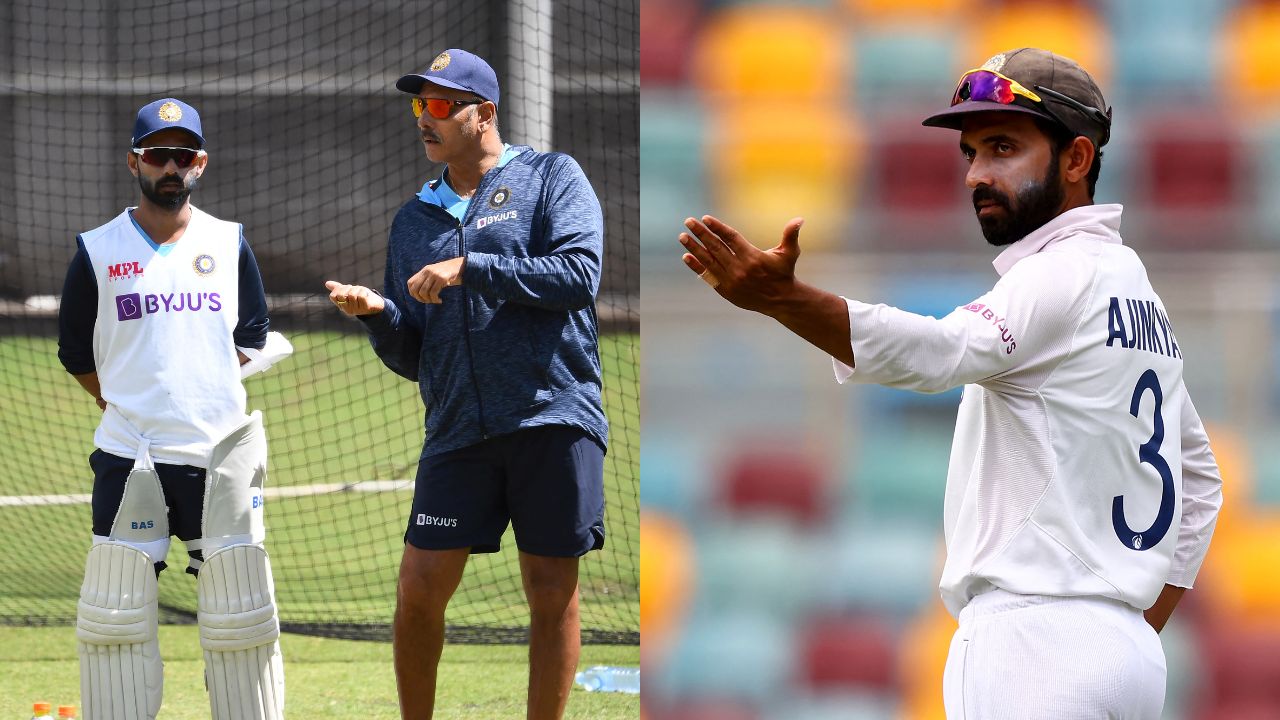
The annals of Indian cricket are replete with tales of extraordinary victories, but few shine as brightly as the 2-1 Test series triumph against Australia in early 2021. This Border-Gavaskar Trophy (BGT) conquest, achieved on Australian soil, was remarkable not just for its outcome but for the sheer resilience displayed by a depleted Indian side. Spearheading this monumental effort was Ajinkya Rahane, who stepped into the captaincy role following Virat Kohli’s departure. However, the celebrations were later accompanied by a contentious discussion, ignited by Rahane himself, concerning the rightful attribution of credit for this historic achievement.
When Ajinkya Rahane Accused Others of Taking Credit
Several months after India had etched its name in cricketing lore, Ajinkya Rahane openly voiced his dissatisfaction, alleging that he was not adequately recognized for his contributions to the team’s success. Speaking candidly on an episode of ‘Backstage with Boria’, the seasoned middle-order batter claimed that ‘someone else’ had unjustly appropriated credit for the crucial decisions he made as captain during the series. This revelation sent ripples through the cricketing fraternity, prompting discussions about leadership, teamwork, and acknowledgement in high-stakes environments.
Rahane’s four-year-old remarks gained renewed traction on the internet recently, particularly after former teammate Ravichandran Ashwin indirectly credited then-struggling opener Rohit Sharma for wicketkeeper-batter Rishabh Pant’s match-winning heroics in the series-deciding Gabba Test. This fresh perspective from Ashwin added another layer of complexity to the ongoing conversation about who truly deserved the laurels for India’s unprecedented victory.
Rahane’s Candid Revelation on Credit Allocation
Leading Team India to a historic 2-1 Test series win in Australia in early 2021 to successfully retain the Border-Gavaskar Trophy was an accomplishment that defied expectations. A year after this incredible series, Ajinkya Rahane candidly expressed his unhappiness over the perceived phenomenon of others taking credit for his on-field and dressing-room decisions. His words shed light on the often-unseen dynamics within a high-performing sports team.
During his appearance on ‘Backstage with Boria’, Rahane articulated his feelings, stating, “I know what I’ve done there. I don’t need to tell anyone. That’s not my nature to go and take credit. Yes, there were some things that I took the decisions on the field or in the dressing room but someone else took the credit for it.” This statement highlighted a personal code of conduct where self-promotion was secondary to team success, yet it also underscored a sense of injustice regarding recognition.
He further elaborated on the aftermath, adding, “After that, the reactions from people or those who took credit or what was said on the media, ‘I did this’ or ‘This was my decision’, or ‘This was my call’, it was for them to talk about.” Rahane’s comments, while not naming specific individuals, clearly indicated a perceived disparity in how credit was distributed publicly, raising questions about accountability and transparency in the sporting narrative.
Ravichandran Ashwin’s Perspective on Rishabh Pant’s Gabba Heroics
Adding another intriguing dimension to the discussion, Ravichandran Ashwin, a key member of that victorious BGT squad, recently offered an indirect credit to then-opener Rohit Sharma for the blistering performance of Rishabh Pant in the decisive Gabba Test. This aligns somewhat with the broader theme of credit allocation that Ajinkya Rahane had previously raised, albeit from a different angle.
Ashwin recounted a pivotal moment during the final day of the Gabba Test when Team India faced the daunting task of chasing 328 runs. He revealed that then-head coach Ravi Shastri initially leaned towards playing for a draw, a conservative approach given the circumstances. However, it was then-opener and future captain Rohit Sharma who advocated for a more aggressive strategy, urging Rishabh Pant to target the victory. This tactical difference of opinion, as described by Ashwin, played a crucial role in shaping the match’s dramatic conclusion.
Speaking at the ESPNCricinfo awards, Ravichandran Ashwin shared, “We were having that weather blogging on one side and the other side with Ravi bhai’s ups and downs. That’s the beauty of Test cricket. In the latter part of the game, Rohit wanted Rishabh to go for the win. Ravi bhai wanted to play for the draw, and it just kept flowing for the next two hours. Great Test match.” Ashwin’s anecdote underscores the dynamic nature of decision-making under pressure and how different influential figures might hold varying perspectives on strategy, ultimately impacting the outcome and the subsequent narrative of who influenced what.
Ajinkya Rahane’s Leadership: Guiding India to a Historic Triumph
Ajinkya Rahane’s elevation to captaincy came under immense pressure and challenging circumstances. With regular skipper Virat Kohli returning home to be with his family for the birth of his child, Rahane inherited a team reeling from a demoralizing eight-wicket loss in the first Test at the Adelaide Oval, a match infamously remembered for India’s record low total of 36 all out in the second innings. The morale was at an all-time low, and the series seemed destined for a whitewash.
However, under Rahane’s calm and astute leadership, India staged one of the most remarkable comebacks in cricketing history. The team responded magnificently in the second Test at the Melbourne Cricket Ground (MCG), securing a convincing eight-wicket victory to level the series. Rahane himself led from the front, scoring a magnificent century that set the tone for India’s resurgence. This victory not only restored faith but also injected a new sense of confidence and belief into the squad.
The resilience continued into the third Test at the Sydney Cricket Ground (SCG) in January 2021. Here, the visitors, battling injuries and racial abuse, managed to secure a fighting draw, thanks to a marathon Day 5 partnership between the injured Ravichandran Ashwin and Hanuma Vihari. Their heroic stand against a formidable Australian bowling attack showcased the grit and determination that Rahane had instilled in the team.
The Gabba Fortress Breached: A Symbol of Indian Grit
The series culminated in the fourth and final Test at The Gabba, Brisbane – a venue where Australia had remained undefeated for 32 years. India, severely hampered by injuries to key players, including many first-choice bowlers, was tasked with chasing a formidable target of 328 runs on the final day. What followed was a display of raw courage and exceptional talent from a young and inexperienced Indian side.
Though Rohit Sharma fell early for just seven runs, the innings was anchored by courageous performances. Shubman Gill struck an enterprising half-century, setting a positive tone. Cheteshwar Pujara, known for his unwavering resolve, endured multiple body blows, absorbing pressure and frustrating the Australian bowlers. Ultimately, it was Rishabh Pant who played a blistering, match-winning knock, steering the visitors to a thrilling three-wicket win with mere minutes to spare. His fearless approach, arguably influenced by the strategic discussions highlighted by Ashwin, sealed an improbable victory.
Captain Rahane also played a crucial, albeit brief, role in this chase, belting 24 runs from just 22 balls to inject vital aggression after the fall of Gill, ensuring the momentum remained with India. This collective effort, guided by Rahane’s steady hand, culminated in a series victory that will forever be etched in cricketing memory.
The Enduring Debate on Credit and Recognition
The discussions initiated by Ajinkya Rahane about credit-stealing, and subsequently amplified by Ravichandran Ashwin’s insights into the Gabba Test’s final moments, highlight a perennial challenge in team sports: the accurate and fair attribution of success. While individual brilliance often captures headlines, the intricate web of leadership, strategic input, and collective effort often remains underappreciated. Rahane’s initial remarks stemmed from a place of seeking due recognition for his stewardship during one of India’s most challenging yet rewarding tours. His actions as captain, from steadying the ship after Adelaide to marshalling a young team to victory at The Gabba, were undeniably pivotal.
The Border-Gavaskar Trophy win of 2021 stands as a testament to strategic leadership, unwavering resolve, and a collective belief in achieving the impossible. While the exact allocation of credit may remain a subject of ongoing debate, the historical significance of the achievement itself, and Rahane’s central role in it, is indisputable. This series remains a benchmark for resilience, proving that even against overwhelming odds, a determined team can overcome the greatest challenges.