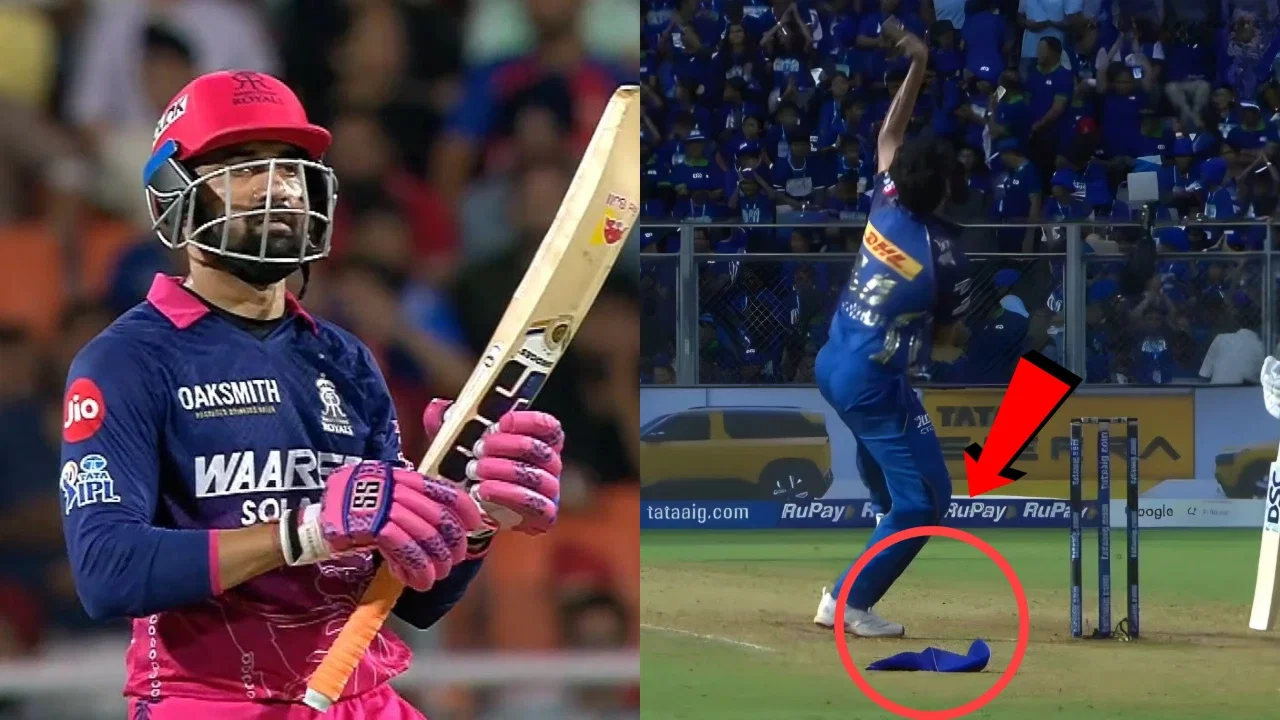
Shubham Dubey controversially declared out after Shardul Thakur towel incident i
A Storm in Mumbai: The Wankhede Controversy
Cricket is a game of fine margins, where a split-second decision can define the trajectory of a match. However, the IPL 2026 clash between Mumbai Indians and Rajasthan Royals provided a talking point that went beyond simple batting or bowling technique. The sight of Shubham Dubey controversially declared out after Shardul Thakur towel incident i has ignited a fierce debate among fans, pundits, and team officials alike.
The Delivery That Sparked the Chaos
The incident unfolded during a tense phase of the innings. Shubham Dubey, representing the Rajasthan Royals, was looking to accelerate the scoring rate. Facing Shardul Thakur, who is well-known for his ability to read the game and manipulate pace, Dubey committed to an aggressive slog-sweep toward the leg side. Thakur, reading the batsman’s intent, cleverly opted for a slower ball, rolling his fingers across the seam to deceive the left-hander.
The deception worked perfectly. Caught off-guard by the lack of pace, Dubey mistimed his shot, resulting in the ball ballooning off the toe-end of his bat. Naman Dhir, positioned at deep mid-wicket, tracked the trajectory and completed a composed catch under significant pressure.
The Towel Incident: A Legal Delivery or Dead Ball?
While the catch itself was textbook, the moments surrounding the delivery drew immediate scrutiny. As Shardul Thakur completed his follow-through, a towel tucked into his waistband slipped and fell to the ground. This visual distraction—or at least, the potential for one—became the focal point of a heated protest from the Rajasthan Royals camp.
Rajasthan Royals head coach Kumar Sangakkara was visibly furious, quickly approaching the fourth umpire to express his displeasure. The core of the argument from the RR management was that the falling towel constituted a distraction that impeded the batter’s focus during the shot. They posited that the ball should have been declared a ‘dead ball’ due to the equipment malfunction or lack of discipline from the bowler.
The Umpire’s Ruling
The match officials took their time to deliberate, carefully reviewing the footage of the delivery. Despite the pressure from the Royals’ dugout, the umpires ultimately concluded that the falling towel did not significantly impact Dubey’s ability to play the shot. They maintained their original decision, and the wicket stood. Dubey, who had contributed only 5 runs off 6 balls, was forced to make the long walk back to the pavilion.
Widespread Fan Reaction
The aftermath of the decision was marked by social media outrage, with many cricket enthusiasts arguing that the rules should have been applied differently. Critics of the decision pointed out that any loose equipment falling during the delivery stride should be penalized to uphold the sanctity of the game. One common sentiment voiced by fans was: “Clearly a dead ball with the towel falling out by Shardul Thakur, but the umpires just decided to ignore it?”
This incident raises an interesting question regarding the laws of cricket and the interpretation of ‘distraction’ by the umpires. While the rules are often clear on paper, the practical application in a high-intensity environment like the IPL can lead to subjective outcomes. For now, the Rajasthan Royals and their fans are left to wonder what might have been had the decision gone in their favor.
As the 2026 season continues to heat up, incidents like this serve as a reminder that drama is never far away in the IPL. Whether this controversy will lead to a clarification in the league’s officiating guidelines remains to be seen. For Shubham Dubey and his team, the focus must now shift to the next challenge, leaving this Wankhede episode in the rearview mirror.