Matthews left frustrated after ‘clear gap’ on caught behind review
A Contentious Moment at Lord’s
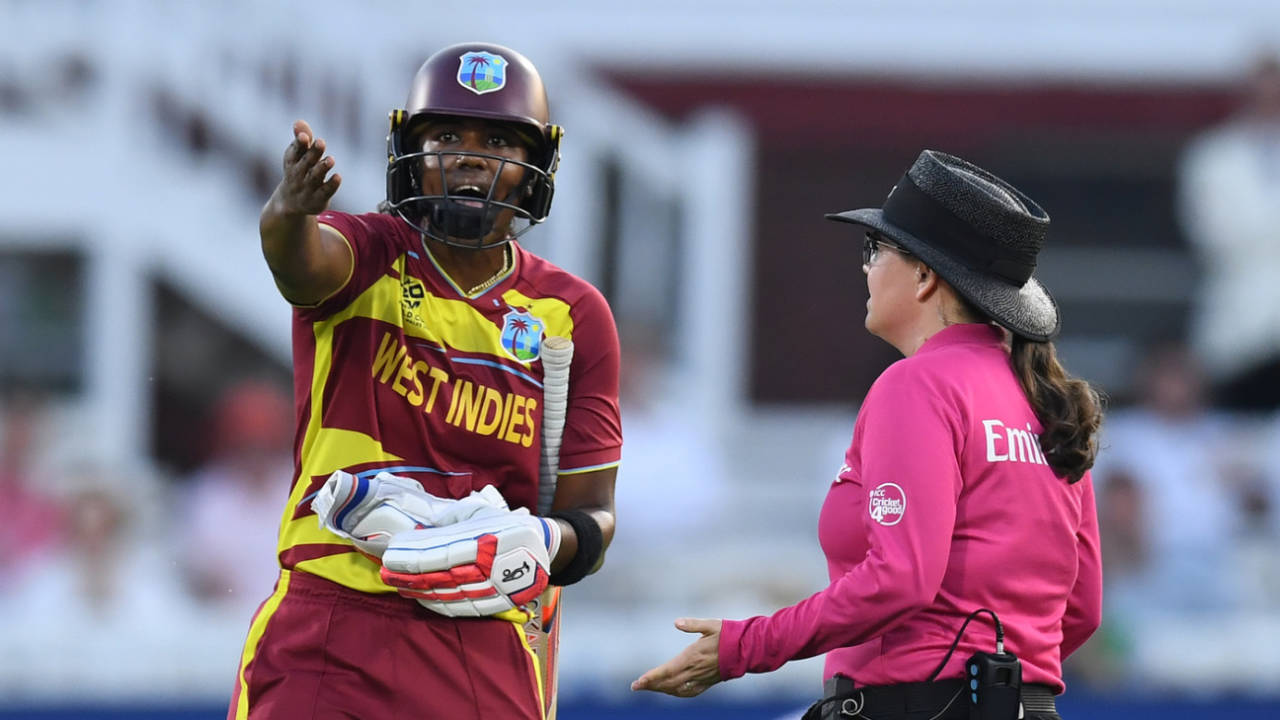
In a pivotal T20 World Cup clash at Lord’s, the cricketing world witnessed a moment of significant controversy as West Indies captain Hayley Matthews was dismissed following a highly debated Decision Review System (DRS) call. The incident occurred during the fourth over of the West Indies’ pursuit of England’s total, leaving the skipper visibly disgruntled and raising fresh questions about the reliability of edge detection technology in the modern game.
The Incident Unfolded
As Matthews attempted a cut shot off the bowling of Linsey Smith, England wicketkeeper Amy Jones appealed for a caught-behind dismissal. On-field umpire N Janani initially signaled not out, but England’s stand-in captain Charlie Dean opted for a review. While the initial video replays failed to show any definitive contact, the TV umpire, Nimali Perera, proceeded to examine the UltraEdge technology. Despite a spike being visible on the sensor, front-on camera angles appeared to suggest a distinct gap between the bat and the ball, prompting a moment of uncertainty that ultimately went against the batting side.
Matthews was visibly upset, engaging in discussions with the on-field officials before departing the field. Her frustration remained evident even from the sidelines, where she was seen reviewing the footage with coach Shane Deitz and holding discussions with the reserve umpire.
Technology Under the Microscope
The incident has reignited the ongoing conversation regarding the limitations of cricket technology. Speaking in the post-match press conference, Matthews explained that she had heard a noise—likely from her own bat handle—but was adamant that she had not made contact with the ball. She noted, “I felt like you could have seen a clear gap between bat and ball, but at the same time, the TV umpire has to work with the technology that there is. She saw a spike, and at the end of the day, I have to respect that.”
This frustration is not isolated. The incident follows a series of high-profile controversies involving similar edge detection systems, most notably during the 2025-26 Men’s Ashes series. For the West Indies, the decision served as a significant blow in their pursuit of England’s competitive total.
A Look at Form and Future Prospects
Beyond the individual incident, Matthews addressed her own form during the tournament. After a solid start with a score of 48 against New Zealand, she has struggled to replicate that success in subsequent matches, recording scores of 14, 17, and 14 against Scotland, Sri Lanka, and England, respectively. However, the captain remains optimistic about the team’s collective resilience.
“I need to get some runs,” she admitted. “Deandra [Dottin] probably feels like she hasn’t been at her best either, and yet we’re still winning games. We’re still competing.”
Matthews highlighted that the team’s current success is a testament to their depth. “I think it’s a really good sign because there was a time we would struggle to win these games without myself or Deandra performing. The fact that we are still in this position while struggling individually shows we have more players we can rely on now.”
The Path to the Semi-Finals
Despite the defeat, the West Indies remain in a strong position within Group 2, holding second place with three wins from four matches. With England having already secured their spot in the semi-finals, the West Indies’ final group stage match against Ireland on Saturday becomes a must-win fixture. A victory would solidify their place in the final four, whereas a loss could invite pressure from New Zealand and Sri Lanka, whose net run rates remain a factor in the tournament’s final standings.
As the team prepares for their final push, the focus will undoubtedly shift back to the cricket, though the conversation surrounding the precision of DRS will likely linger in the background of this exciting T20 World Cup tournament.