Wyatt-Hodge, Knight and bowlers power England into semi-final at Women’s T20 World Cup 2026
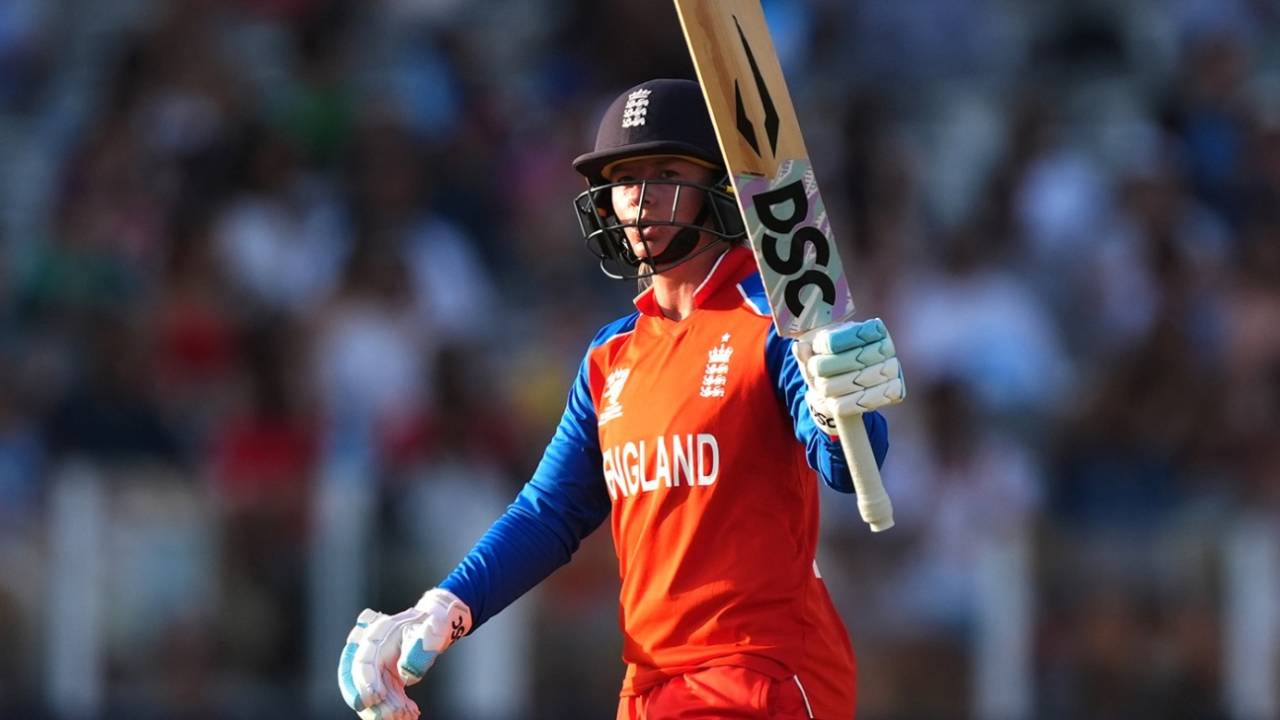
England has officially cemented its place as the first team to qualify for the Women’s T20 World Cup 2026 semi-finals, following a commanding 38-run victory over a resilient West Indies side. The foundation of this crucial win was laid by a determined half-century from Danni Wyatt-Hodge, delivered under gruelling conditions, and expertly supported by captain Heather Knight. The comprehensive performance at Lord’s underscored England’s championship aspirations, demonstrating both batting prowess and disciplined bowling.
On a sweltering evening at the historic Lord’s Cricket Ground, where temperatures soared to an intense 34 degrees Celsius just moments before the toss, the English squad rose to the challenge. Wyatt-Hodge, showcasing remarkable composure and skill, crafted a vital 64 runs from just 42 deliveries. Her innings provided the impetus England needed, complemented by a swift 43 runs off 26 balls from Heather Knight, whose aggressive approach ensured the scoring rate remained high.
In defence of their competitive total, England’s bowlers executed their plans with precision, effectively stifling the West Indian batting line-up. The spin trio of Charlie Dean, Sophie Ecclestone, and Linsey Smith proved particularly instrumental, collectively claiming four wickets and maintaining tight control over the run rate. While Chinelle Henry, with an unbeaten 51, and Jahzara Claxton mounted a stubborn 63-run partnership for the fifth wicket, their resistance ultimately proved insufficient against England’s sustained pressure.
The match was not without its moments of contention, notably an early dismissal of West Indies captain and pivotal player, Hayley Matthews. Given out caught behind for 14 after an England review, the decision sparked animated discussions, with one camera angle appearing to show a discrepancy between the visual evidence and the UltraEdge technology. Despite Matthews’ passionate appeals and her team’s valiant efforts, England held firm, securing their spot in the knockout stage while West Indies remains in contention.
West Indies Strike Early Amidst Early English Resistance
The match began with an immediate impact from West Indies’ fast bowler Chinelle Henry, who celebrated an early breakthrough on just the fifth ball of the innings. A fuller delivery outside the off stump, carrying a hint of away swing, enticing England opener Amy Jones into a drive. The ball found the edge, looping gracefully to Afy Fletcher at short third man, sending Jones back to the pavilion and giving West Indies an early psychological advantage.
However, the early setback did little to deter Danni Wyatt-Hodge, who quickly found her rhythm. Despite Henry conceding 17 runs in her subsequent over, Wyatt-Hodge’s confidence grew. She asserted her presence with a powerful pull shot through midwicket and a fortunate top edge that sailed over Fletcher, signaling her intent to dominate. This aggressive response demonstrated England’s resilience and Wyatt-Hodge’s determination to anchor the innings.
Off-spinner Ashmini Munisar was then introduced into the attack, and after Sophia Dunkley elegantly reverse-swept her for a boundary, Munisar responded with an intelligent fuller delivery. This ball proved too full for Dunkley’s attempted sweep, trapping her plumb lbw and securing West Indies’ second wicket. Despite these early losses, the partnership between Wyatt-Hodge and Alice Capsey was instrumental in navigating the challenging early overs. They skillfully outmaneuvered the field placements, guiding England to their most productive powerplay of the tournament thus far, reaching a commendable 57 for 2, a testament to their strategic batting and effective risk-taking.
Wyatt-Hodge’s Dominance Continues with Another Crucial Half-Century
Danni Wyatt-Hodge once again proved her mettle, ascending to the top of the tournament’s run-scoring charts with another pivotal score. Her performance followed a magnificent century on the opening night, reaffirming her status as a key batter for England, even after enduring two less productive innings. Her ability to consistently deliver under pressure, especially in a crucial match, highlights her importance to the squad.
Wyatt-Hodge capitalized on any short bowling offered by the West Indies attack, dispatching boundaries with authority. She showcased a versatile batting display, peppering the off-side with a combination of classic drives and lofted shots, demonstrating her mastery of timing and placement. Her superb form culminated in a well-deserved half-century, achieved off just 32 balls, elegantly brought up with a back-footed flick off the pads to cover, a shot that underscored her comfort and control at the crease.
The partnership between Wyatt-Hodge and Alice Capsey flourished, bringing 65 vital runs for the third wicket. Capsey displayed her innovative stroke play, unfurling a beautiful reverse sweep for four off Karishma Ramharack. However, her aggressive intent led to her downfall two deliveries later, as she advanced to a length ball and found Chinelle Henry at long-on, ending her promising innings. Following Capsey’s departure, Wyatt-Hodge and captain Heather Knight forged another significant partnership, adding 40 runs. Their collaboration, however, ended abruptly when a miscommunication during a quick single saw Wyatt-Hodge run out after Knight’s cut shot went straight to the cover fielder. The sapping heat, combined with the intensity of the innings, meant Wyatt-Hodge simply did not have the energy to make it back to the crease, concluding a valiant effort.
England’s Middle Order Consolidates, Ensuring a Formidable Total
In the latter stages of England’s innings, there was no repeat of the explosive partnership between Freya Kemp and Dani Gibson that had dismantled Scotland at Headingley just days prior. West Indies captain Hayley Matthews shrewdly bowled Kemp, who was attempting a sweep, effectively curtailing any potential late surge. Captain Heather Knight, despite surviving a couple of close calls and near misses, was eventually run out, further limiting England’s capacity for a grandstand finish.
Dani Gibson also fell cheaply on the penultimate ball of the innings, signifying a disciplined effort from the West Indies bowlers in the death overs. However, by this point, England had already accumulated a substantial total, largely thanks to the earlier efforts of Wyatt-Hodge and Knight. Their contributions ensured that even without a late flurry of boundaries, the home side had more than enough runs on the board to challenge the West Indies batting line-up, setting a formidable target that would test their opponents’ resolve and skill.
Controversy Surrounds Hayley Matthews’ Dismissal
A significant point of contention in the match revolved around the dismissal of West Indies captain Hayley Matthews in the fourth over. Matthews was visibly perplexed when England successfully overturned a not-out decision for caught behind, following her attempt to cut a delivery from Linsey Smith. The contentious nature of the decision was immediately apparent, as Matthews adamantly insisted she had made no contact with the ball.
Replays added to the confusion: while one camera angle seemed to show a distinct gap between bat and ball, UltraEdge technology simultaneously indicated a spike, suggesting contact. Despite the ambiguity, TV umpire Nimali Perera ultimately ruled Matthews out. The West Indies captain, visibly frustrated, spent a considerable amount of time engaging in animated discussions with the on-field umpires, vigorously presenting her case both on and off the field.
Her protest continued even after leaving the field, as Matthews was observed reviewing more replays in the West Indies dugout and further debating the decision with the fourth umpire on the sidelines. This contentious incident drew parallels to the “Snicko controversy” during last year’s Ashes, where TV umpire Chris Gaffaney upheld a not-out decision for Australia’s Alex Carey despite a clear spike appearing several frames before the ball passed the bat. In this instance, however, the official scorecard recorded Matthews as out for 14, a decision that undoubtedly impacted West Indies’ chase given her pivotal role.
England’s Spinners Tighten Grip on West Indies Chase
The West Indies chase began with an aggressive intent, particularly from Deandra Dottin in the last over of the powerplay. Dottin launched an assault on Charlie Dean’s first four balls, plundering 15 runs, including back-to-back fours followed by a powerful six over long-on. Her audacious hitting threatened to shift the momentum, but Dean, demonstrating remarkable composure, delivered a crucial riposte on the final ball of the over.
Tossing one up on middle and leg, Dean invited Dottin to clear long-on once more. Dottin, however, failed to connect fully, and the ball found Alice Capsey just inside the boundary, ending a dangerous cameo. This vital wicket left West Indies at 46 for 2 after six overs, preventing them from gaining significant early momentum. England’s control was further solidified by the disciplined and frugal bowling of Sophie Ecclestone, who maintained tight lines and lengths, choking the flow of runs.
Charlie Dean then continued her impressive spell, securing her second wicket in as many balls. With the very first delivery of her next over, she had Jannillea Glasgow chopping on, further deepening West Indies’ batting woes. England’s spinners collectively asserted their dominance, systematically dismantling the West Indies middle order and maintaining a firm grip on the match. This performance was a stark contrast to their previous T20 World Cup encounter in 2024, where fielding errors proved costly, denying England a spot in the knockout phase. This time, despite missing two chances in three balls as Claxton and Henry valiantly dug in, England’s vastly improved side, particularly their bowling unit, ensured there would be no repeat of past disappointments, expertly guiding them to a well-deserved victory and a semi-final berth.
This victory is more than just a win; it is a statement from England. It solidifies their position as a formidable contender in the Women’s T20 World Cup 2026. The blend of experienced players like Wyatt-Hodge and Knight delivering under pressure, combined with the disciplined and effective bowling unit, showcases a well-rounded and cohesive team ready for the challenges of the semi-finals. While West Indies showed flashes of brilliance and resilience, particularly through Henry’s unbeaten fifty, they ultimately succumbed to the consistent pressure applied by the English side. England will now look to carry this momentum into the next stage, confident in their ability to compete for the ultimate prize on home soil.